• Deutsch
  • English
  • Italiano
  • Français
  • Polski
  • Čeština
MERKwürdig. Zeithistorisches Zentrum Melk MERKwürdig. Zeithistorisches Zentrum Melk
    • Deutsch
    • English
    • Italiano
    • Français
    • Polski
    • Čeština

Sidebar

  1. You are here: 
  2. Home
  3. History
  4. The fatalities of the satellite concentration camp of Melk
The fatalities of the satellite concentration camp of Melk

Apr 23, 2018 | 176 words · 1 min
The fatalities of the satellite concentration camp of Melk
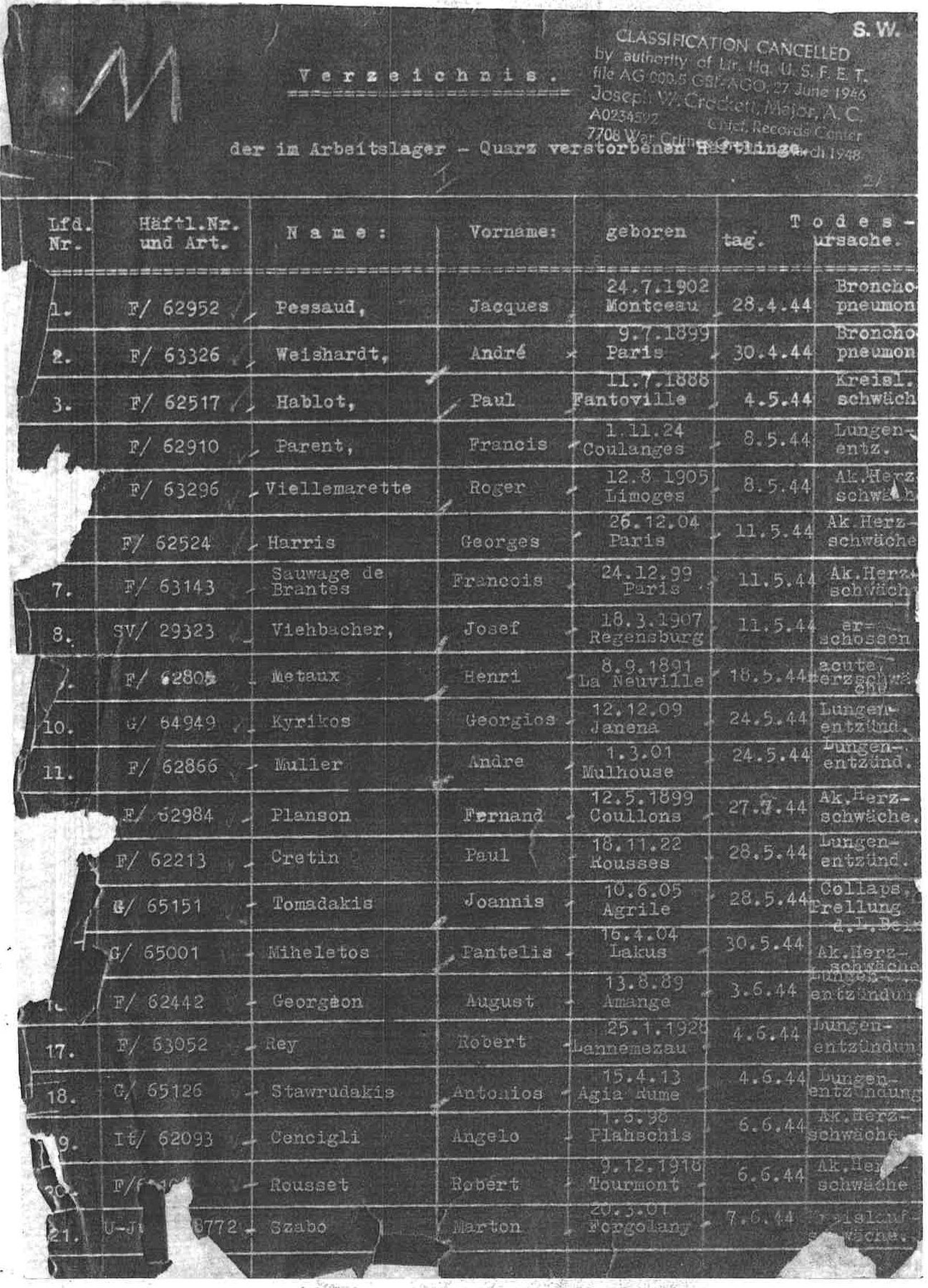
Scan of a page of Melk’s Book of the Dead. Source: National Archives, Washington.

Within a year 4.874 prisoners lost their lives in the satellite concentration camp of Melk.

About a third of the fatalities were prisoners of Polish and Hungarian origin, approximately 11 percent were French. The death rate was disproportionately high among the Jewish prisoners: they represented a third of the prisoners, while about 42 percent of the fatalities were categorized as Jewish.

There are several reasons for the extremely high death toll in the satellite concentration camp of Melk: hard physical labor; a high work pace and many accidents during the forced work (which was considered essential to the war effort) in the tunnel complex in the Wachberg hill in Roggendorf; malnourishment and inadequate clothing; the housing situation on the grounds of the Birago barracks as well as constant maltreatment by guards, prisoner functionaries and civil workers. In addition to deaths due to illness among the severely weakened concentration camp prisoners, there were deliberate murders, including those committed by SS member Gottlieb Muzikant, a medic in Melk’s sick bay, through lethal injections. More than 200 prisoners were also killed in July 1944 in a bombing raid by the Fifteenth US Air Force.

Relevant tags:

#Geschichte

Weitere Artikel

Background

Along with the “Anschluss” in March 1938 the German Reich started also in Austria to quickly adapt and expand the industry for armament purposes.

Establishment of the camp

As producer of extremely important war material the Steyr-Daimler-Puch company was a high priority target for the Allies.

The concentration camp prisoners in Melk

The 14.390 all male prisoners who were forced to work in the satellite camp of Melk came from more than 26 different countries.

Forced labor

Transports of prisoners from Mauthausen concentration camp to Melk were organized according to the needs of the building companies who constructed the tunnel complex near Roggendorf.

Evacuation of the camp

Until the end the SS tried by all available means to prevent the liberation of surviving concentration camp prisoners by the Allied forces.

Sidebar

  • © 2026 »MERKwürdig. Zeithistorisches Zentrum Melk«
  • Logo Logo